Fruitcase Distinctive Printed Luggage
INTRO
FRUITCASE is a playful luggage brand built to bring fun and joy back to travel.
MAKE developed the brand's carry-on suitcase from concept through to production, combining high-resolution printed imagery, a genuinely novel dual-skin construction method, and a turnkey approach to manufacturing that took the product from early creative direction through to tooling and supplier oversight.



-
The brief was to create distinctive, genuinely fun luggage, fruity by name and fruity by nature, in a category where most products default to muted colours and near-identical silhouettes. That playful identity needed to be balanced with a more serious ecological commitment, including carbon offset initiatives built into every purchase, so the brand needed to feel joyful without feeling disposable or throwaway.
The technical challenge was just as demanding as the brand challenge: applying vivid, high-resolution imagery to a hardshell suitcase in a way that would survive years of genuine travel abuse, without compromising the clean, refined finish expected of a premium product.
-
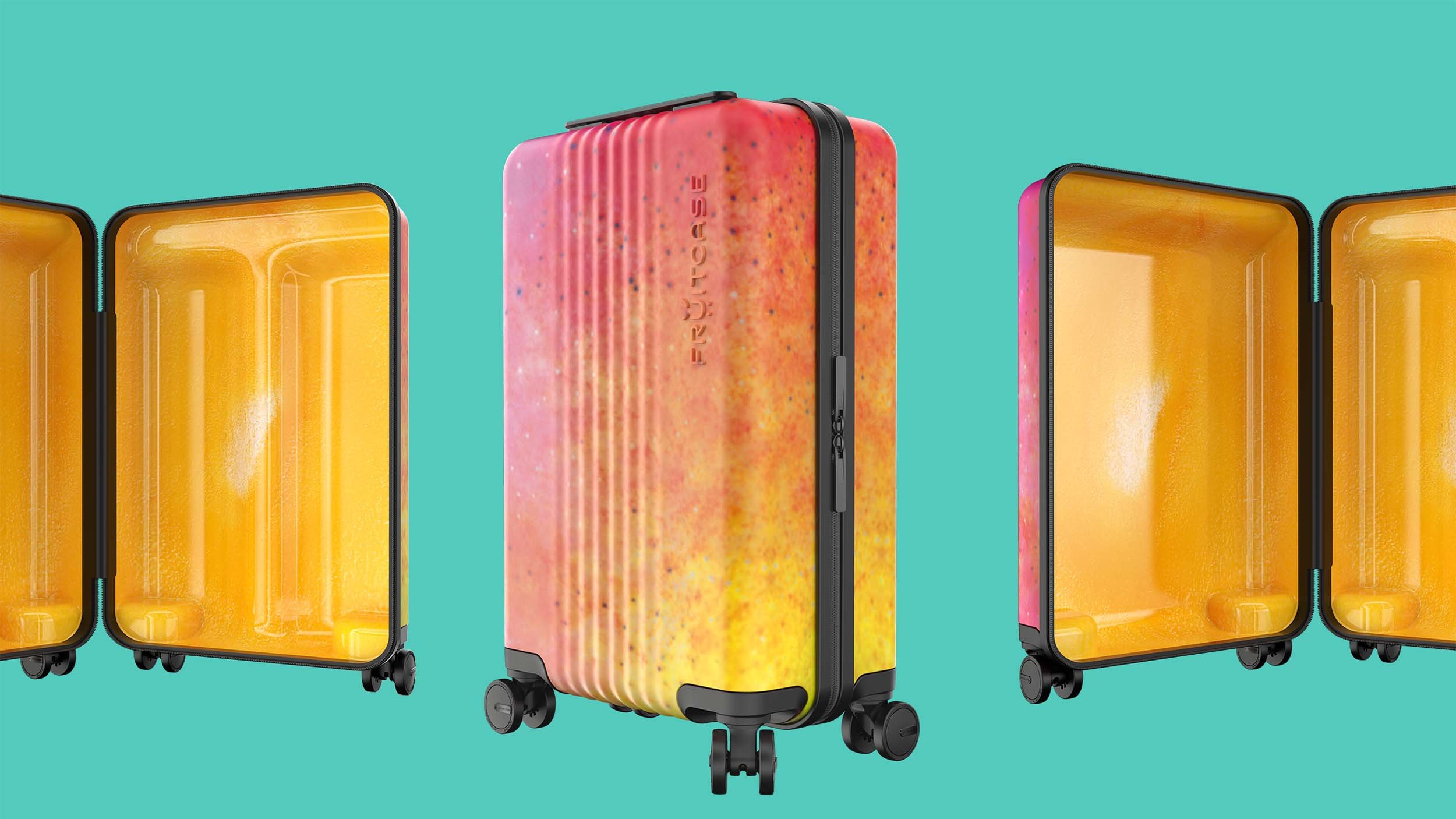
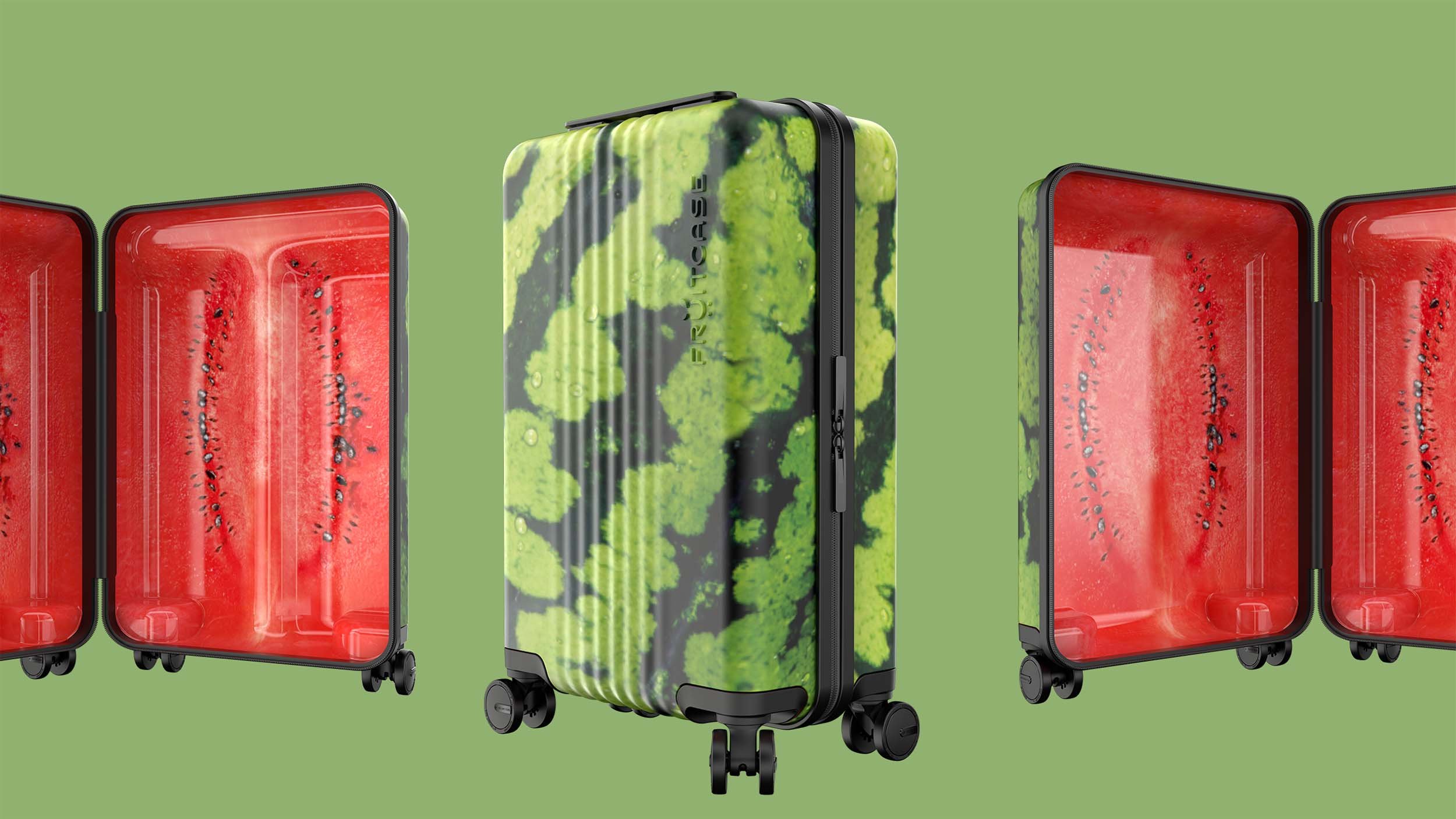
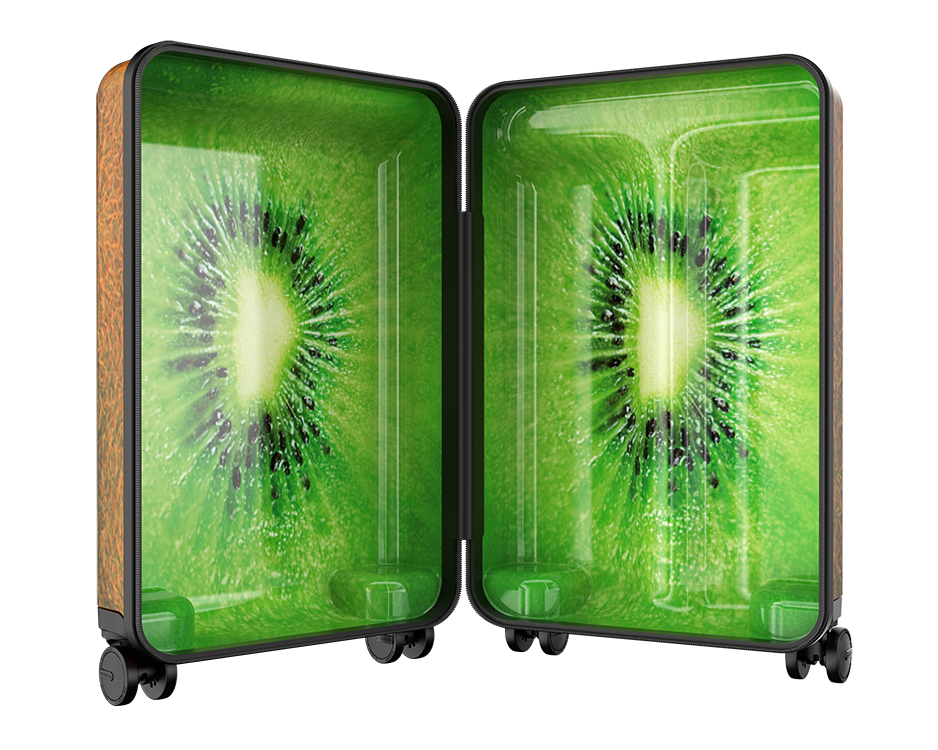
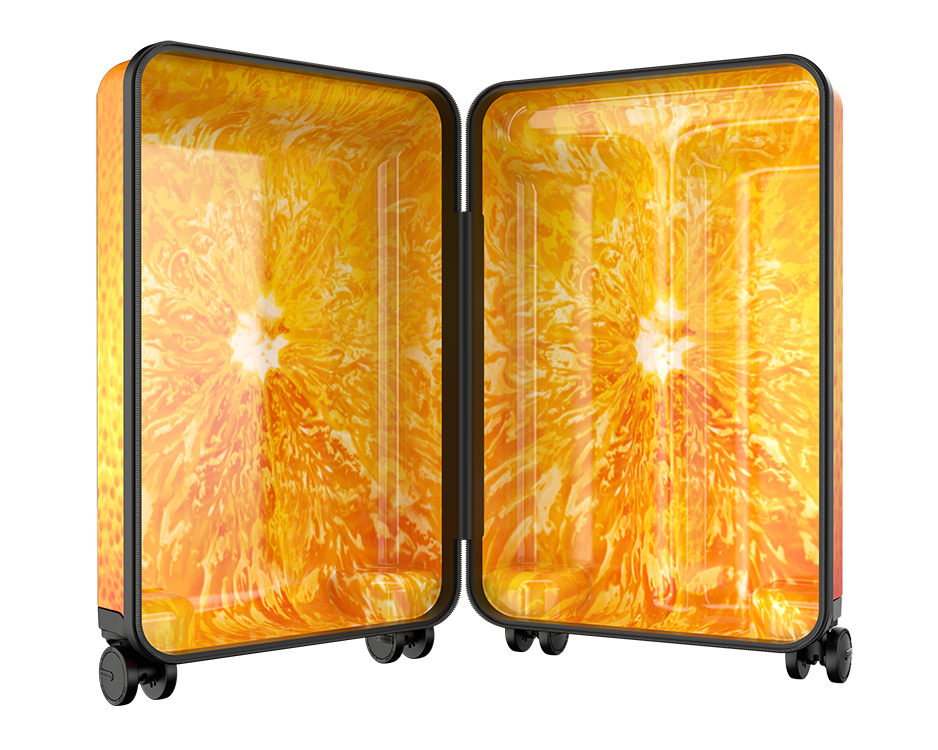
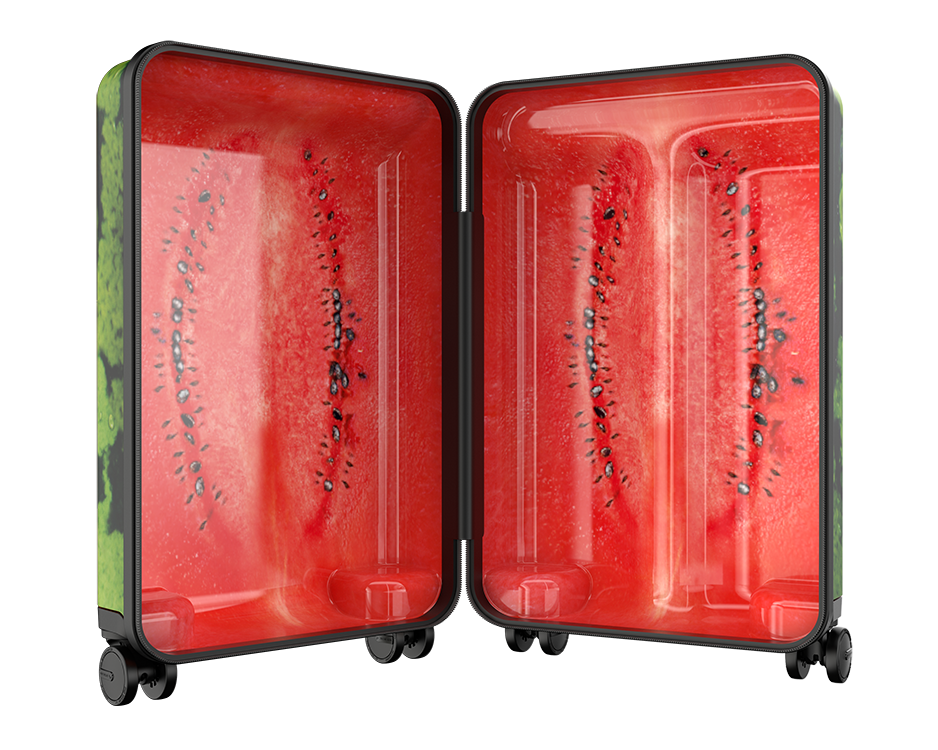
Early exploration focused on high-tech printing technologies capable of applying a pattern directly to the outer shell, with a secondary pattern printed on the reverse inner face to create a distinctive external/internal effect as the case was opened.
Multiple trials and experiments were conducted, including separating layers with primers intended to improve opacity and vividness, with selected Chinese manufacturers consulted to produce sample shells. The results fell short. Print vibrancy and long-term durability simply weren’t good enough for a product that needed to look sharp after real use, not just in a first sample.
That led to the dual-skin approach that ultimately defined the product: two thinner polycarbonate shells rather than one thick moulded shell, which allowed standard, more reliable printing technology to be used on each layer independently. The dual-skin construction had a second, equally valuable benefit, it created custom cavities between the layers where fixings and internal components could be cleanly concealed, producing an uninterrupted visual effect with no visible hardware disrupting the printed imagery.
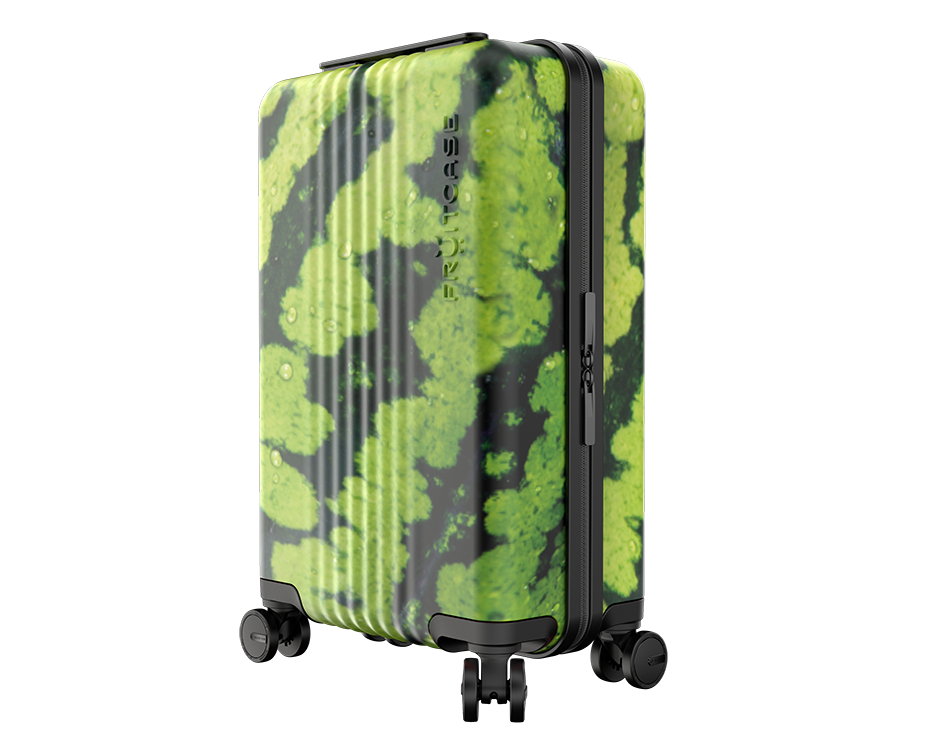
Detailing was kept deliberately restrained to balance the case’s playful printed surfaces: an embossed logo, and all-black handle, zippers and wheels throughout. High-spec, all-black Japanese OEM wheel and handle components were specified for genuine fit and finish quality, while custom-designed branded zip pullers and discreetly laser-etched logos added a level of sophistication that printed graphics alone couldn’t achieve. MAKE managed supplier sourcing and oversight of the aluminium tooling and initial vacuum forming process for the shell directly, alongside creative direction over the design, imagery and detailing, delivered as a genuinely turnkey service from concept to production.
-
Dual-skin polycarbonate shell construction, enabling reliable standard printing on each layer independently
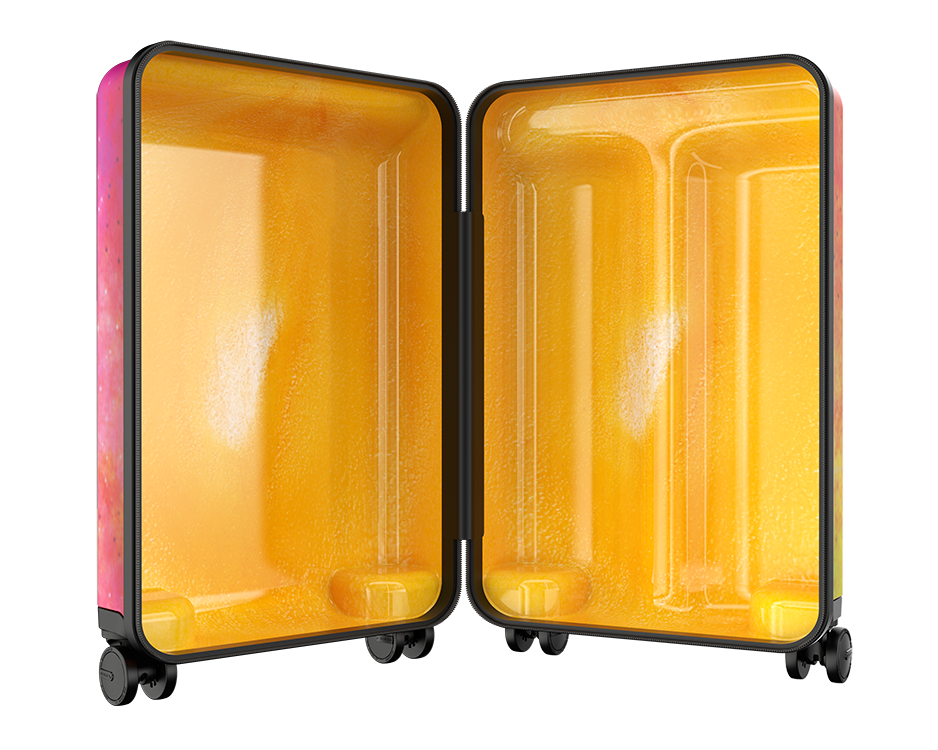
Matching inner and outer printed patterns creating a distinctive open-case visual effect
Custom cavities between shell layers concealing all fixings and internal components
Minimal all-black detailing; handle, zippers, wheels, balancing the case’s playful printed surfaces
High-spec Japanese OEM wheel and handle components for premium fit and finish
Custom branded zip pullers and discreet laser-etched logo detailing
Turnkey delivery. Creative direction, tooling and supplier oversight managed directly by MAKE
-
The result is a refined, smooth-running, genuinely distinctive piece of luggage, built around a unique construction method and a super-clean, monocoque-style interior with no visible fixings to disrupt the design.
The dual-skin approach solved a manufacturing problem that more conventional printing methods couldn’t; durable, vivid imagery, produced reliably at scale, while quietly delivering a cleaner interior as a direct result.
Where does your next adventure take you? Proof that even the most commoditised product category can become genuinely distinctive, when a manufacturing constraint is treated as a creative opportunity rather than a limitation to work around.